Nerve discomfort is miserable, and that makes it a magnet for overclaiming. Two ingredients in this formula have real clinical research behind them. One carries an interaction the official page gets flatly wrong. Here is the honest version, and what it costs.
Check Today’s Price See Packages

PEA and alpha-lipoic acid both have human trial evidence for nerve symptoms.
Morning or night, whichever fits — no complicated timing or stacking.
Manufactured in Aurora, Colorado.
One-time purchase with no subscription and nothing to cancel.
We have to correct the seller directly on one point. The official page states Arialief has no side effects and can be taken with any medication. That is not accurate: alpha-lipoic acid can lower blood sugar, and combined with diabetes medication it can push it too low. Since most people with neuropathy are diabetic, that is the central caution here, not a footnote.
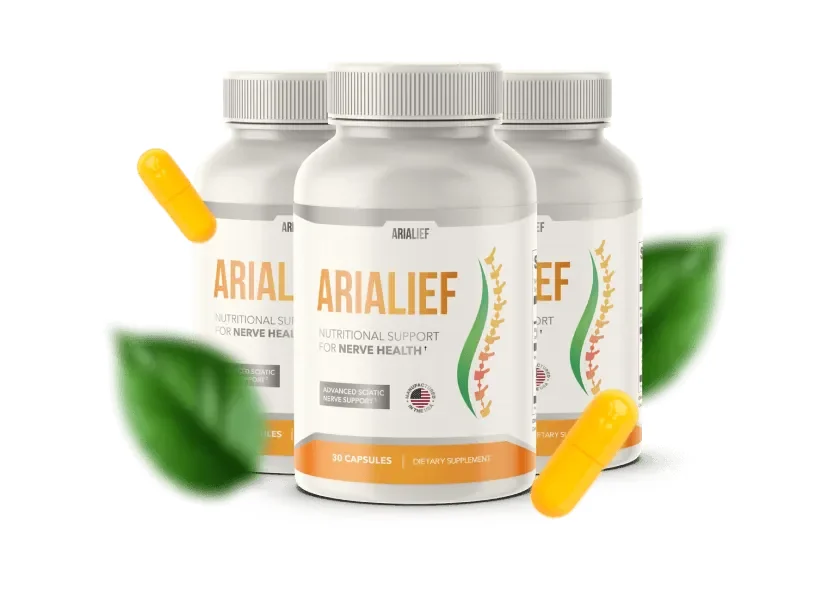
Arialief is a once-daily capsule aimed at the burning, tingling and numbness of peripheral nerve discomfort. It is manufactured in Aurora, Colorado, sold as a one-time purchase with no subscription, and carries a 60-day satisfaction guarantee.
The formula is led by palmitoylethanolamide — PEA — which is more interesting than the usual botanical filler. PEA is a fatty acid amide your own body produces in response to tissue stress, and it has been studied in randomised controlled trials for neuropathic and chronic pain. It is not a herb with a folk reputation; it is a compound with a genuine clinical literature.
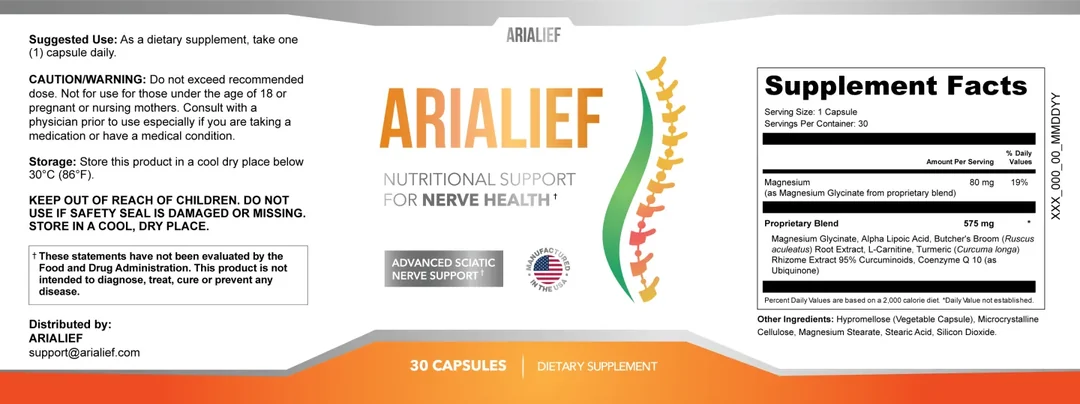
Alongside it sit alpha-lipoic acid, magnesium glycinate, butcher's broom, L-carnitine, turmeric and CoQ10. The alpha-lipoic acid deserves particular attention: at 600 mg daily it has been studied specifically for the symptoms of diabetic peripheral neuropathy, and in Germany it has been used clinically for that purpose for years. Two genuinely researched actives in one capsule is well above the average for this category.
The honest limits are two. First, amounts are not published, and since the ALA research used a specific 600 mg dose, you cannot tell whether this formula reaches it. Second, the seller's own FAQ says best results take three to six months and recommends four to six months of use — while the guarantee runs 60 days. Those two numbers do not line up, and you should know that before you choose a package.
| Product type | Nerve support supplement (capsules) |
| Serving | One capsule daily, morning or night |
| Lead compound | Palmitoylethanolamide (PEA) |
| Key ingredients | Alpha-lipoic acid, magnesium glycinate, butcher's broom, L-carnitine, turmeric, CoQ10 |
| Amounts disclosed | No — check the official label |
| Made in | Aurora, Colorado, USA |
| Price | $158 (2) · $207 (3) · $294 (6) |
| Guarantee | 60-day satisfaction guarantee |
| Subscription | None — one-time purchase |
Sold through the Arialief official website only. One-time payments, with free US shipping from the three-bottle package up and four bonus guides included with the six-bottle order.

Prices and bonuses shown were listed on the official order page when this page was last reviewed and are set by the seller. Confirm the package, total, shipping and the 60-day refund terms on the final order screen before paying.
Three mechanisms, two of them with real clinical literature behind them.
PEA is produced naturally in your body in response to tissue stress, and it acts on cells that amplify pain signalling — particularly mast cells and glia — rather than blocking pain the way a painkiller does. It has been tested in randomised controlled trials for neuropathic and chronic pain, which puts it in a different class from the botanicals that fill most nerve formulas.
Alpha-lipoic acid is an antioxidant that works in both water and fat, and nerve tissue under metabolic stress — as in diabetes — accumulates oxidative damage. At 600 mg daily it has been studied for the burning, tingling and numbness of diabetic peripheral neuropathy, and it is prescribed for exactly that in some countries. This is the best-evidenced ingredient on the label.
Nerves need blood flow and energy. Butcher's broom is a traditional venous circulation herb, L-carnitine shuttles fat into mitochondria for fuel, CoQ10 supports the mitochondria themselves, and magnesium glycinate contributes to normal nerve signalling and muscle relaxation. Supporting cast, sensibly chosen.
The formula, strongest evidence first — and a clear account of the interactions the seller's own page denies.
The best-evidenced ingredient here. In the SYDNEY 2 trial, 181 patients with diabetic polyneuropathy took oral ALA for five weeks, with 600 mg daily giving the best balance of symptom improvement and tolerability — higher doses brought more side effects without more benefit. It is used clinically for this indication in parts of Europe, and the evidence base is regularly re-examined, including in a 2024 Cochrane review. Two honest caveats: this label does not publish its amount, so you cannot confirm it reaches the studied dose — and ALA can lower blood glucose. If you take insulin, metformin or a sulfonylurea, that combination can cause hypoglycaemia and needs your doctor.
A fatty acid amide your body makes naturally when tissue is under stress. Rather than blunting pain signals directly, it damps down the cells that amplify them. PEA has been evaluated in randomised controlled trials for neuropathic and chronic pain and is among the better-supported non-prescription options in this area — a genuinely thoughtful choice as the lead ingredient.
Magnesium is involved in normal nerve conduction and muscle relaxation, and low magnesium is common. The glycinate form is well absorbed and far gentler on digestion than oxide — a real formulation choice rather than a cost-saving one, and glycine itself has mild calming properties that suit night-time dosing.
Carnitine transports fatty acids into mitochondria for energy. Most of the neuropathy research uses acetyl-L-carnitine specifically, at doses well above what a multi-ingredient capsule typically holds. Reasonable to include; the evidence belongs to a particular form and dose.
Curcumin has broad anti-inflammatory research behind it and poor absorption without a carrier such as piperine or a lipid formulation. The practical caution: turmeric may increase bleeding risk alongside warfarin, aspirin or clopidogrel, and should be paused before surgery.
Supports cellular energy production in tissues with high demand, and absorbs considerably better when taken with a meal containing fat. Note that CoQ10 can interact with warfarin, so anyone on it should raise this with their doctor.
Best known in Europe for chronic venous insufficiency and heavy, swollen legs, where it has reasonable evidence. Its use for nerve comfort is an extrapolation from improved circulation rather than direct nerve research — plausible, but not the reason this formula works if it works.
Realistic possibilities rather than promises — none has been demonstrated with the finished product. “Repairs nerve damage” and “cures neuropathy” are deliberately absent, because no supplement has been shown to do either.
The core aim — PEA and ALA both have human research on nerve-related discomfort.
ALA and CoQ10 address the oxidative stress that damages nerve tissue over time.
Butcher's broom and CoQ10 support the blood supply nerves depend on.
Nerve discomfort is often worst at night; magnesium glycinate may help with settling and sleep.
Less discomfort tends to mean more walking — which itself supports nerve and circulatory health.
One capsule daily, taken whenever suits you — easy to sustain over the months this needs.
The three-bottle package includes one digital guide; the six-bottle package includes four, alongside free US shipping.


These are digital downloads delivered after purchase, and the seller's “$49.95 value” labels are marketing figures rather than prices anyone pays. Choose your package on the four-to-six-month timeline the maker itself recommends, not on the bonuses.
Buyer feedback follows a clear pattern: sleep and general comfort shift earliest, nerve sensations change slowly if at all, and the people reporting the most benefit gave it months rather than weeks and kept their medical care running alongside.
“My endocrinologist flagged the alpha-lipoic acid straight away because I am on insulin — she was not against it, she just wanted me testing more often for the first few weeks in case my sugars dropped. Good advice, and it did run a little lower. Three months in, the burning in my feet at night is less intense. Not gone. Less.”
Walter S., 68 — Arizona
“I appreciated that the capsule is once a day, because I already take enough. My tingling is somewhat better after about ten weeks and I sleep through more often, which I suspect is the magnesium. Four stars: the label should print the amounts, and the guarantee should be longer given they themselves say it takes months.”
Maureen C., 62 — Ohio
“Straight answer: this did not fix my neuropathy and I did not really expect it to. What helped most was my doctor finding my B12 was low and treating that — which is worth anyone getting checked before spending on supplements. Arialief seems to take the edge off and I have had no problems with it. Buy the six-pack if you buy at all; two bottles tells you nothing.”
Peter L., 71 — Florida
Testimonials are illustrative and not typical. Individual results vary, and no outcome is guaranteed.
About $1.63 a day on the six-bottle package, with free US shipping, four bonus guides and 60 days to decide.
One-time payment · No subscription · Secure checkout
A 60-day satisfaction guarantee from the original purchase date, handled through the official contact page. Worth knowing plainly: the maker's own FAQ recommends four to six months of use for best results, so the guarantee window is shorter than the timeline it suggests.
Because of that gap, the sensible approach is to judge early signals inside the window — sleep, night-time discomfort, general comfort — and decide by around day 50 rather than waiting. Keep your order confirmation email; it carries the order number the process runs on.
Neuropathy has many causes — diabetes, B12 deficiency, thyroid disease, alcohol, spinal compression, medication side effects — and several are genuinely treatable. A B12 test alone has changed more outcomes than any supplement. New, sudden, one-sided or rapidly worsening symptoms need prompt assessment.
This is the specific thing to raise, not a generic disclaimer. ALA can lower blood glucose, so if you take insulin or oral diabetes medication you may need to monitor more closely at first. Mention the turmeric and CoQ10 too if you are on a blood thinner.
That is where the current pricing, free multi-bottle shipping, the bonus guides and the 60-day guarantee apply. Read the final order screen before paying and save the confirmation email.
Take one capsule daily and keep a short weekly note of night-time discomfort and sleep — memory for pain is unreliable. Decide by around day 50 while the guarantee still covers you.
Arialief is sold through the official website only. Listings under the name on Amazon, Walmart or eBay are unauthorised resellers or counterfeits, outside the 60-day guarantee.
With a product whose lead compounds are PEA and alpha-lipoic acid — neither of which you can identify by looking at a capsule — an unverifiable seller is a genuine gamble. A listing priced far below $49 a bottle is telling you something about what is actually inside it.
Secure your Arialief package while the current pricing holds. Official website only, one-time payment, with free US shipping and the bonus guides on the multi-bottle bundles.

Arialief is a once-daily nerve support capsule built around palmitoylethanolamide (PEA), with alpha-lipoic acid, magnesium glycinate, butcher's broom, L-carnitine, turmeric and CoQ10. It is manufactured in Aurora, Colorado, sold as a one-time purchase with no subscription, and comes with a 60-day satisfaction guarantee from the original purchase date.
Through three routes. PEA acts on the cells that amplify pain signalling — mast cells and glia — rather than blocking pain directly the way a painkiller does. Alpha-lipoic acid is an antioxidant active in both water and fat, addressing the oxidative stress that damages nerve tissue in conditions like diabetes. And butcher's broom, L-carnitine, CoQ10 and magnesium support the circulation, cellular energy and signalling that nerves depend on.
The finished product has not been clinically tested. Two of its ingredients genuinely have: PEA has randomised controlled trial evidence in neuropathic and chronic pain, and alpha-lipoic acid improved symptoms of diabetic polyneuropathy at 600 mg daily in the randomised, placebo-controlled SYDNEY 2 trial, and is used clinically for that indication in parts of Europe. The catch is dose — this label does not publish amounts, so you cannot confirm it reaches the studied levels. Expect modest support over months, not a cure.
No, and we would rather contradict the sales page than repeat it. Alpha-lipoic acid can lower blood glucose, which matters enormously here because most people with peripheral neuropathy have diabetes — combined with insulin or oral diabetes medication it can cause hypoglycaemia. Turmeric and CoQ10 may also increase bleeding risk with warfarin and similar medicines. These are manageable with a doctor's input, but they are real and they should be disclosed.
The official page says yes to everything; we would say ask your doctor, and specifically mention three things. Diabetes medication — because of the alpha-lipoic acid and the hypoglycaemia risk. Blood thinners — because of the turmeric and CoQ10. And thyroid medication, which ALA may interfere with. Spacing the capsule from other medicines by about half an hour is sensible, but spacing does not remove a pharmacological interaction.
Palmitoylethanolamide (PEA) as the lead compound, plus alpha-lipoic acid, magnesium glycinate, butcher's broom root extract, L-carnitine, turmeric and CoQ10, in a vegetable capsule with standard excipients. Per-ingredient amounts are not published in the available materials — the formula's main transparency gap, and a meaningful one given ALA's research dose is a specific 600 mg.
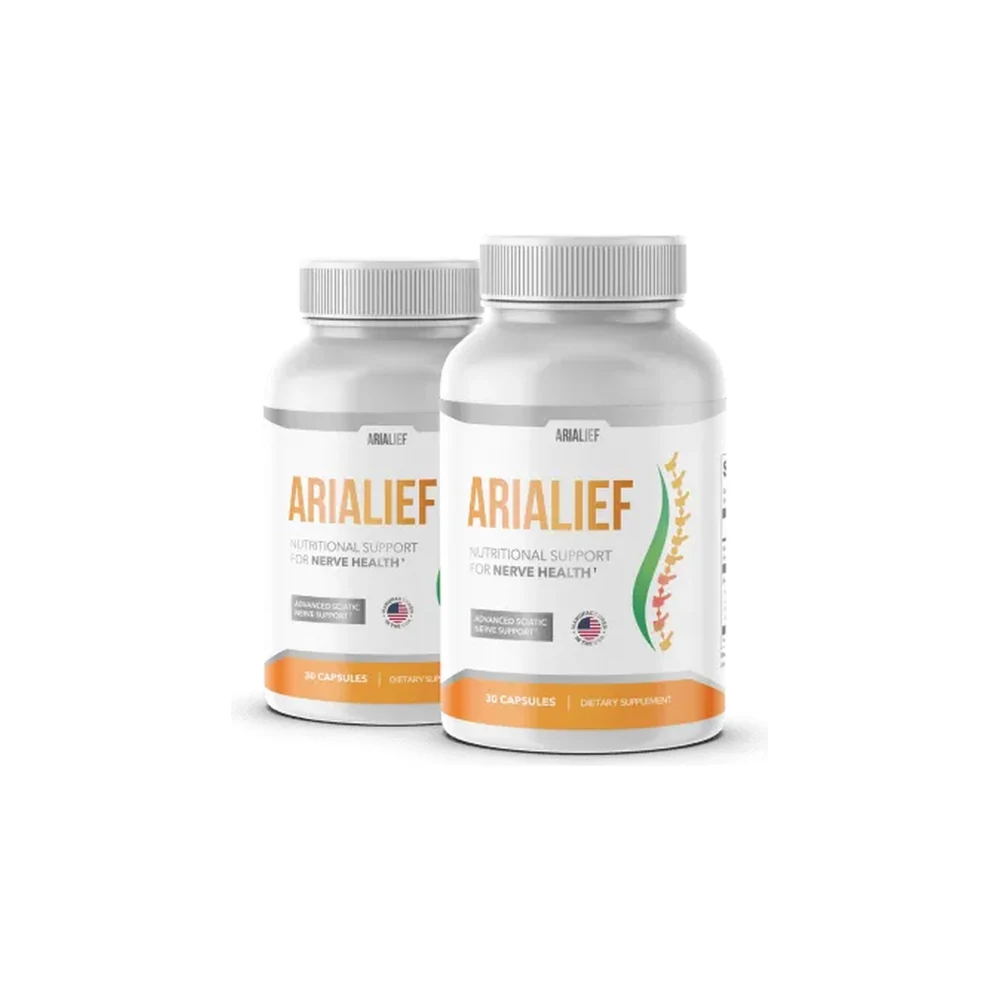
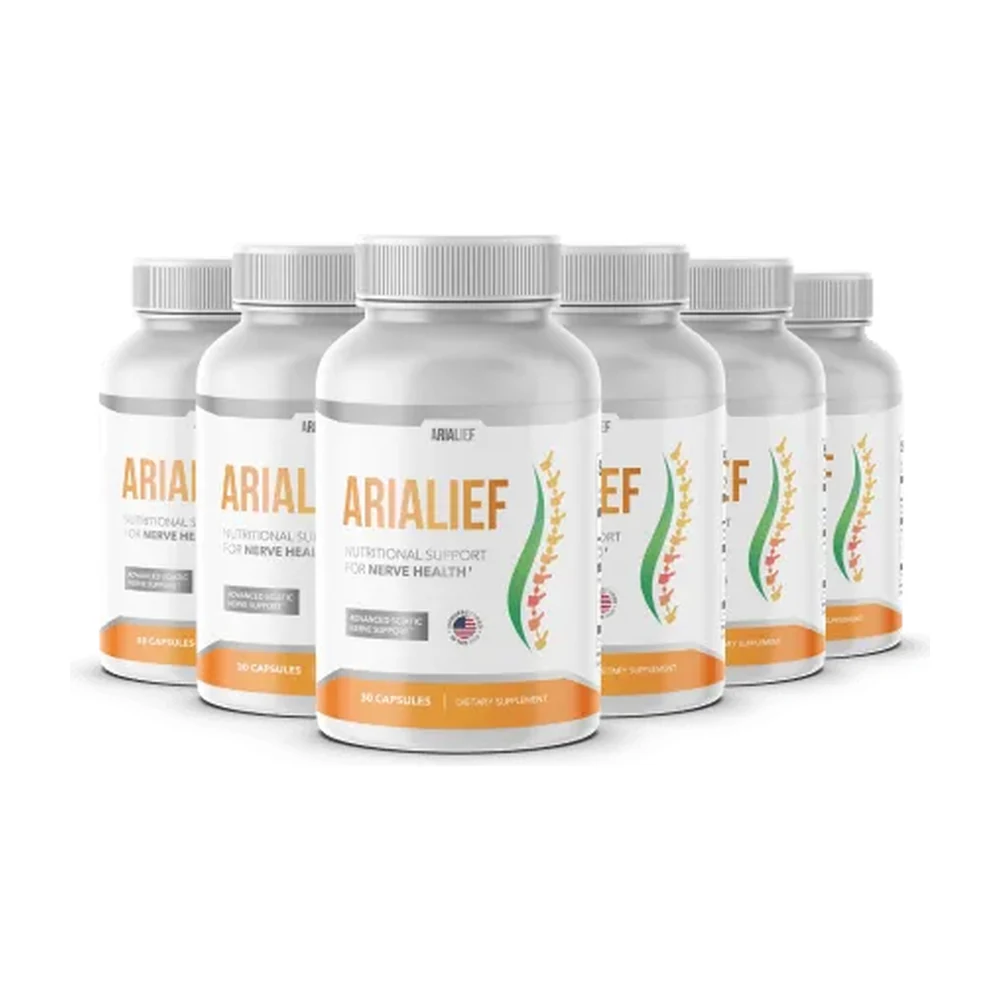
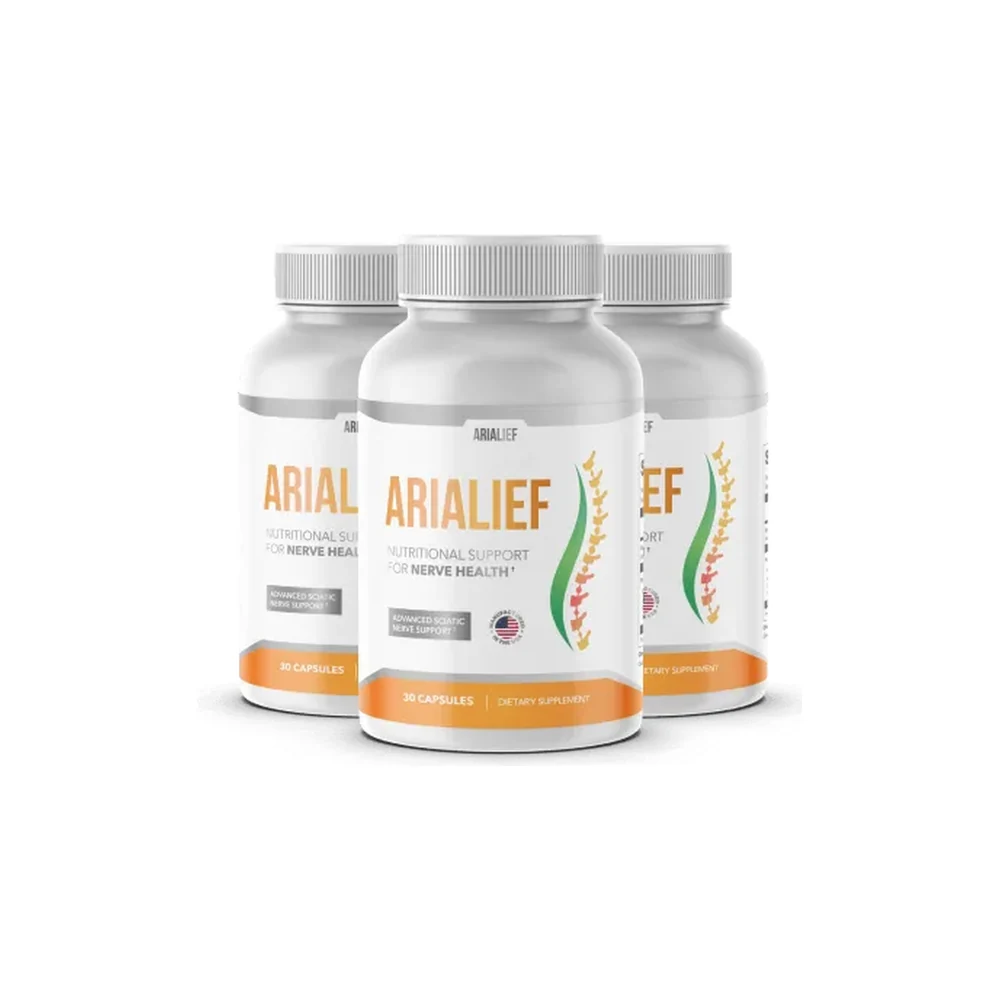
From the official order page: two bottles are $158 ($79 each, shipping extra, no bonuses); three bottles are $207 ($69 each) with free US shipping and one bonus guide; six bottles are $294 ($49 each, about $1.63 a day) with free US shipping and four bonus guides. All are one-time payments with no subscription — the maker states there is no auto-billing.
Longer than most buyers expect, and the maker agrees: its own FAQ says some people notice something within a week, most need three to six months, and it recommends four to six months of consistent use. Sleep and general comfort tend to shift earliest. Nerve sensations change slowly, because nerve tissue itself recovers slowly — if at all, depending on the cause.
Not by the maker's own timeline, and that gap is worth naming. The guarantee runs 60 days while the recommended course is four to six months. The practical approach is to judge early signals inside the window — night-time discomfort, sleep quality, general comfort — and make a decision by around day 50, rather than drifting past the deadline hoping for month four.
Before buying anything, ideally. Neuropathy has many causes — diabetes, vitamin B12 deficiency, thyroid disease, alcohol, spinal compression, chemotherapy and certain medications — and several respond to treatment of the underlying problem. A simple B12 test is one of the highest-value checks you can ask for. Sudden, one-sided or rapidly worsening numbness or weakness needs prompt assessment, as does any new foot wound if you are diabetic.
No — no dietary supplement is FDA approved. Supplements are regulated as food without pre-market efficacy review. Manufacturing in an FDA-registered facility describes the standards the facility follows, not approval or endorsement of the product.
Through the Arialief official website only, where current pricing, free multi-bottle shipping, the bonus guides and the guarantee apply. If you are not satisfied, contact the company through its official contact page within 60 days of the original purchase date. Keep your confirmation email for the order number. Marketplace listings are unauthorised and outside the guarantee.
Real, verifiable PubMed records covering ingredients in this formula. None tested Arialief itself.
Regular Price: $179/per bottleToday: $49/per bottle
On the 6-bottle package · About $1.63 a day · Free US shipping · 4 bonus guides included
Get Your Discount NowOne-time payment · No subscription · 60-day money-back guarantee
The four things that decide it, side by side.
PEA and alpha-lipoic acid both have genuine human trial evidence for nerve symptoms — two researched compounds in one capsule is well above this category's average.
ALA's research used 600 mg daily. This label does not publish amounts, so you cannot confirm the formula reaches the studied dose.
“No side effects” is not true. ALA lowers blood glucose — a real issue alongside diabetes medication, which most neuropathy patients take.
The maker says 4–6 months; the guarantee is 60 days. Judge early signals and decide by day 50 rather than drifting past the window.
The verdict — 4.8/5: if you want nerve support alongside proper investigation of the cause, Arialief is better chosen than most — PEA and alpha-lipoic acid both have genuine human trial evidence. The selling is the weak part: unpublished amounts, a claim of no side effects that is simply wrong, and a four-to-six-month timeline against a 60-day window. At $49 a bottle, get your B12 checked and tell your doctor about the alpha-lipoic acid.